Trust and the responsibility that goes with it
I was talking to Mike the other day. We had arranged to meet at the end of a weekday, for a quick drink before dinner. We both live a short distance from each other, so we met at a neighbourhood pub.
As we caught up on the week's events, things that had happened to each of us and things coming up to look forward to, we touched on the subject of my mother's diaries and her "life" story, which she wrote in the years leading up to her death. My brother Clive had been in contact to ask if I would be happy for him to publish our mother's memoir on Amazon, as a downloadable Kindle or print-on-demand version. I had only received the email that day, and I was mulling over how I felt about this document potentially being out in the public domain, and whether anyone would really have any inclination to read it. It's been well over ten years since Mum died, so my initial thought was: why now?
Mike listened to me vocalising my internal dialogue about it. What was the point? Who would read it? Was it too personal? It affects myself, Clive and my sister, and also others who are mentioned; should we all consent? Was there an ethical question to consider, even in death?
Mike listened, and said he thought I would figure it out once I'd given it some thought. Even if I decided to put it out there, he trusted that I would only do that if it was the right thing to do.
It made me think of the blog posts I write, and of the photographs I've published on my website. I mentioned this to Mike, and he simply said that because we know each other so well, he completely trusted me with those photographs and that text. If I considered it okay to put it "out there," that was fine by him. He said he felt some sensitivity to it: "It's not something I'd do myself, but I trust you'd only do it if you thought it was okay."
I registered the gravity of that statement immediately. What I had published, on both our behalfs, was deeply personal and deliberate. There was nothing in it that could be considered scandalous or controversial; it was, and remains, personal stories that reference deep emotion and loss. Those are subjects not often spoken about, but I had framed the context for both the photographs and the blog posts, and I believed they were hugely relevant and important, and said much about how we deal with inheritance and loss.
And that is really what connects these two questions. My mother cannot consent to what is published about her now; she can only be represented by the choices the rest of us make on her behalf, and trust that we make them with care. Mike, by contrast, consents in advance, not to any specific photograph or line of text, but to me, and to my judgement. Both are forms of the same thing: someone else's story or image, placed in my hands, on the understanding that I will treat it as they would want it treated, even when they are not there to say so themselves.
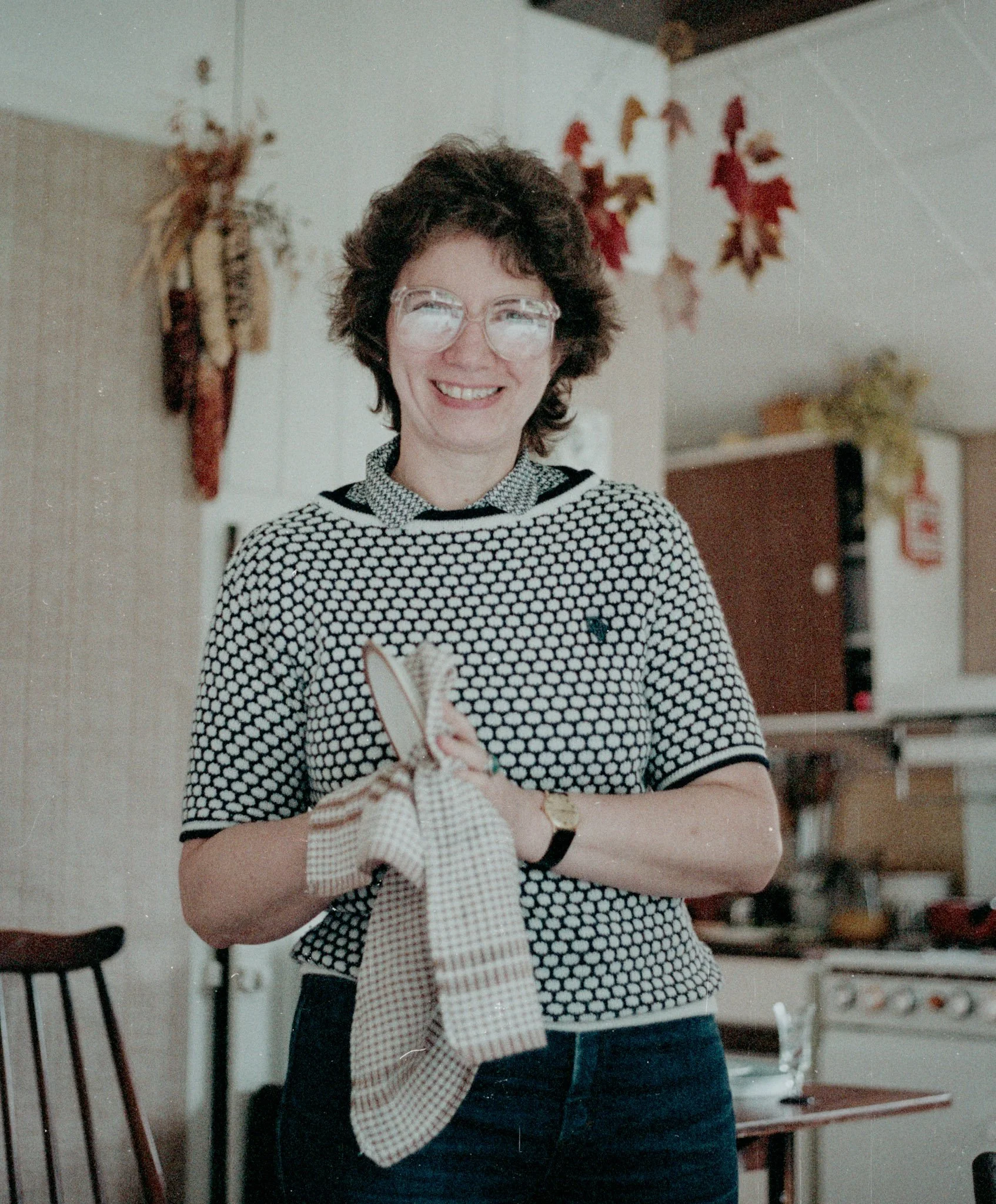
My Mum, circa 1981.
That is what Mike was trusting me with. It is an honour and a privilege, and it underlines something about the ethics of representing people we love, whether they are a friend beside you at the pub or a mother ten years gone. As friends, we look out for each other and protect each other, and he was trusting me to do the right thing. That emotional contract might as well be written in blood. It is that significant.
© Max Mcgonigal 2026
