What’s left?
On the 21st June I went to the Brixton Windmill to see some live music, and met up with Mike, Danny, and Pat. We'd had the evening planned for a couple of months, and despite it being a Monday (a "school night"), it was great to get out and see the old crowd. We go back a long way, having known each other since college and university days. Over the last 30 years we've met up on many occasions to see all sorts of varied, alternative, avant garde music (some of it good, some of it not so good), and we also made music together during Mike's most creative era, back in the 90s. Pat, myself, Danny and Mike made two albums' worth of tracks, which Danny has kept and shared with us (he's the archivist). We talked about it in the Whitehorse pub before walking round the corner to the Windmill, reminiscing and laughing at the strange things we once recorded together.
So what does any of this have to do with the day I went to photograph Mike's story?
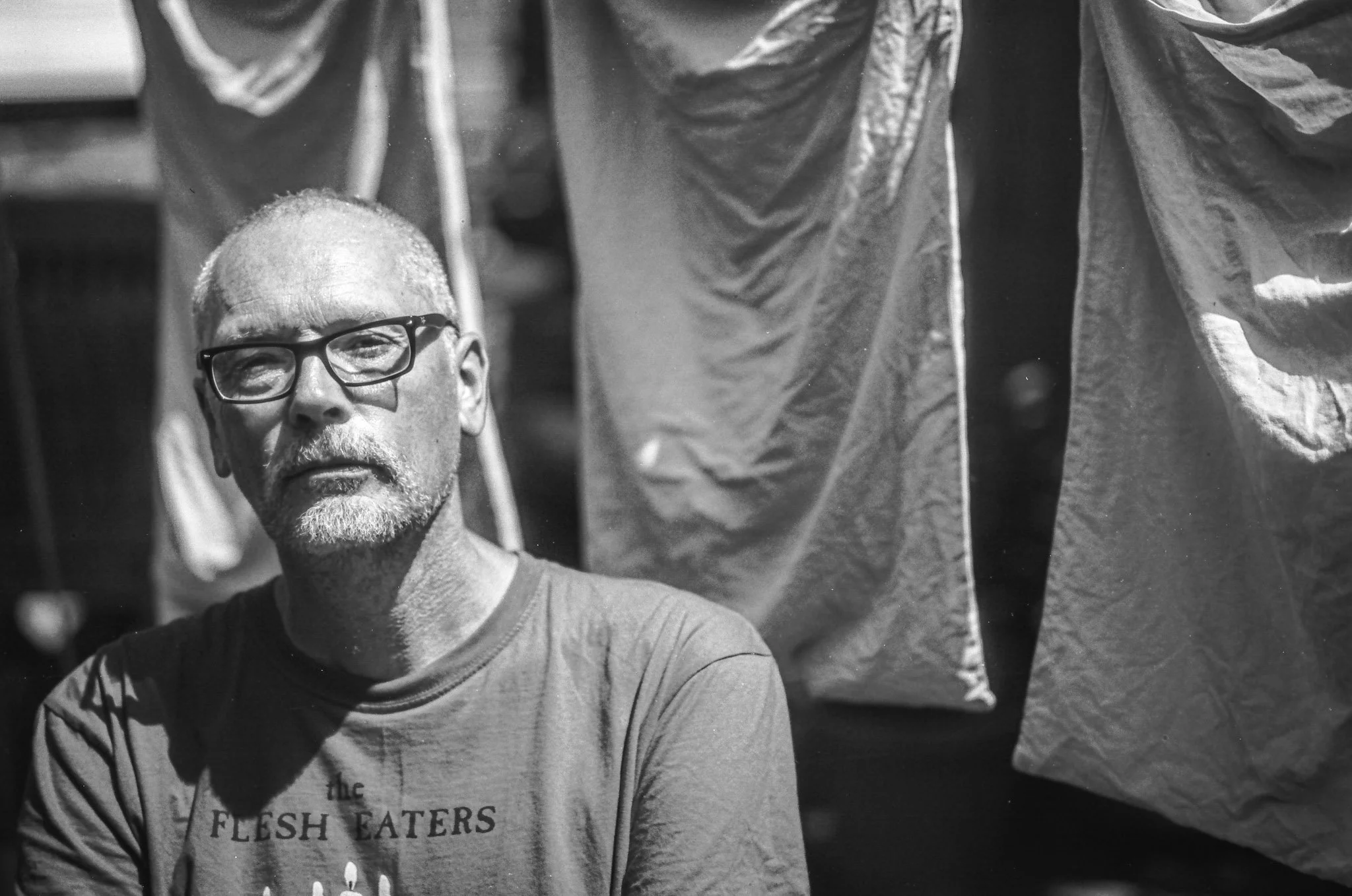
Well, mine and Mike's lives are parts of a larger jigsaw puzzle. Each piece only goes in one way, one space, and connects to other stories, people, places, and time. Mike's piece connects to my own, and we first fitted them together in Streatham, as teenagers, starting out at college and discovering our first taste of independence. We hung out a lot back then, listening to music or whatever else filled the evenings. Mike's home in Leithcote Gardens was close to my own, and I'd met his father a couple of times when visiting, though I knew very little about him or the circumstances of their family life. Like my own, his father-son relationship was fragmented, and something you didn't talk about as teenagers. We've lived close by, either in the same neighbourhood or borough, for the best part of 40 years. Largely coincidental, but fortunate too, since it's kept us in at least irregular contact with each other.
Since I divorced, we've probably lived closer to each other than ever before, just two or three streets apart. For a while it was a lifeline, and we saw each other far more regularly. I think we share a quiet appreciation of each other's company, and a distinctly absurd sense of humour, which has genuinely been one of the steadiest anchor points between us. A mutual love of music has also meant we keep going to see both good and bad gigs, always with the expectation that we'll come away with something worth holding onto.
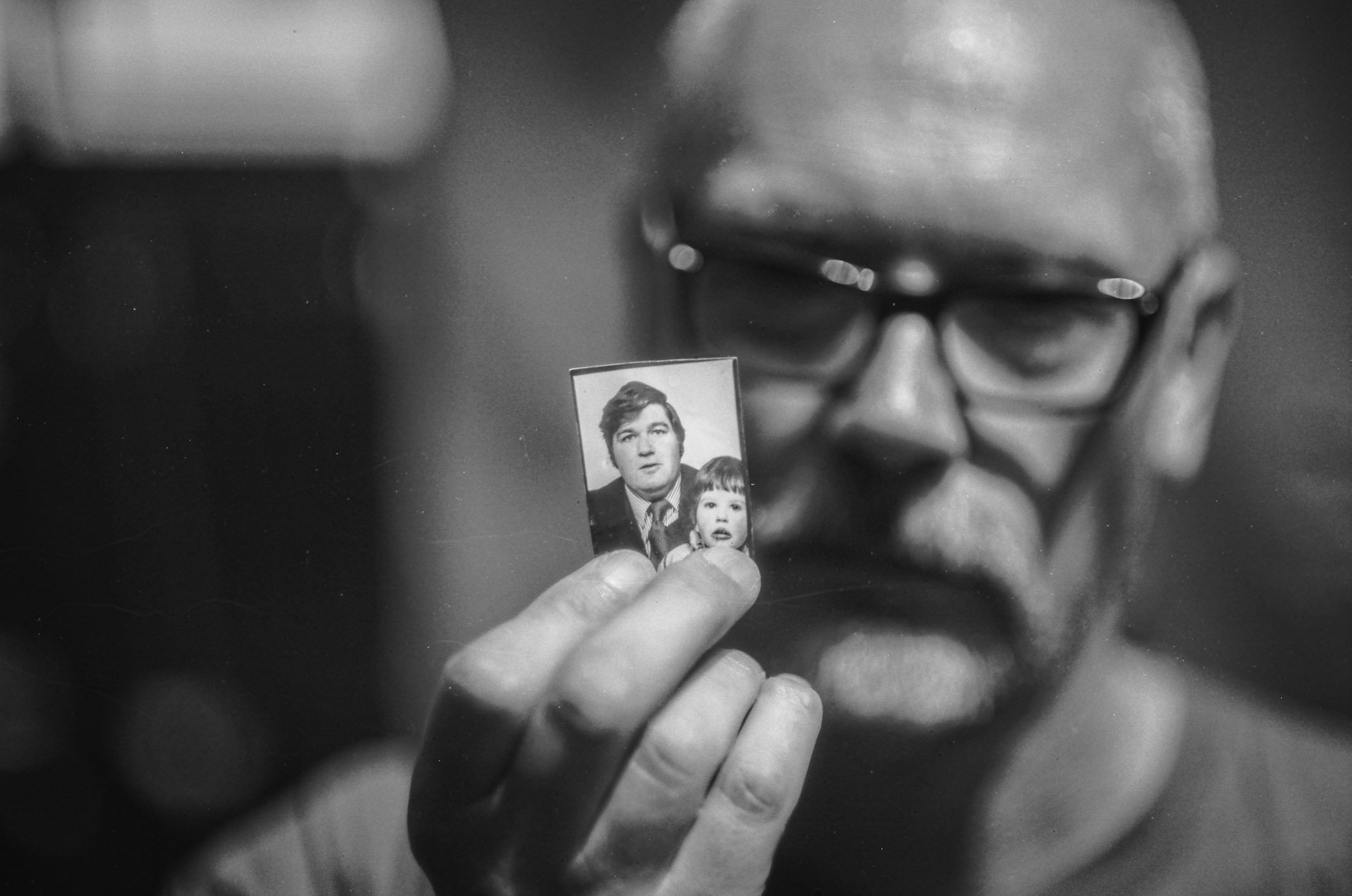
Mike has followed my progress on the photographic project since its inception and has always been encouraging, so I felt I could ask him to be part of it, given that his own father-son relationship, like my own, was shaped by absence. His father Roy died in the 1990s. Mike has few mementos from that time, apart from a photobooth strip of Roy with Mike's older sister Katherine, who died as a child. The photo was taken in the seventies: a toddler with a chocolate-smeared mouth sitting on her father's knee, both of them a little startled by the flash. Two people on a day out, caught in an ordinary, indexical family moment.
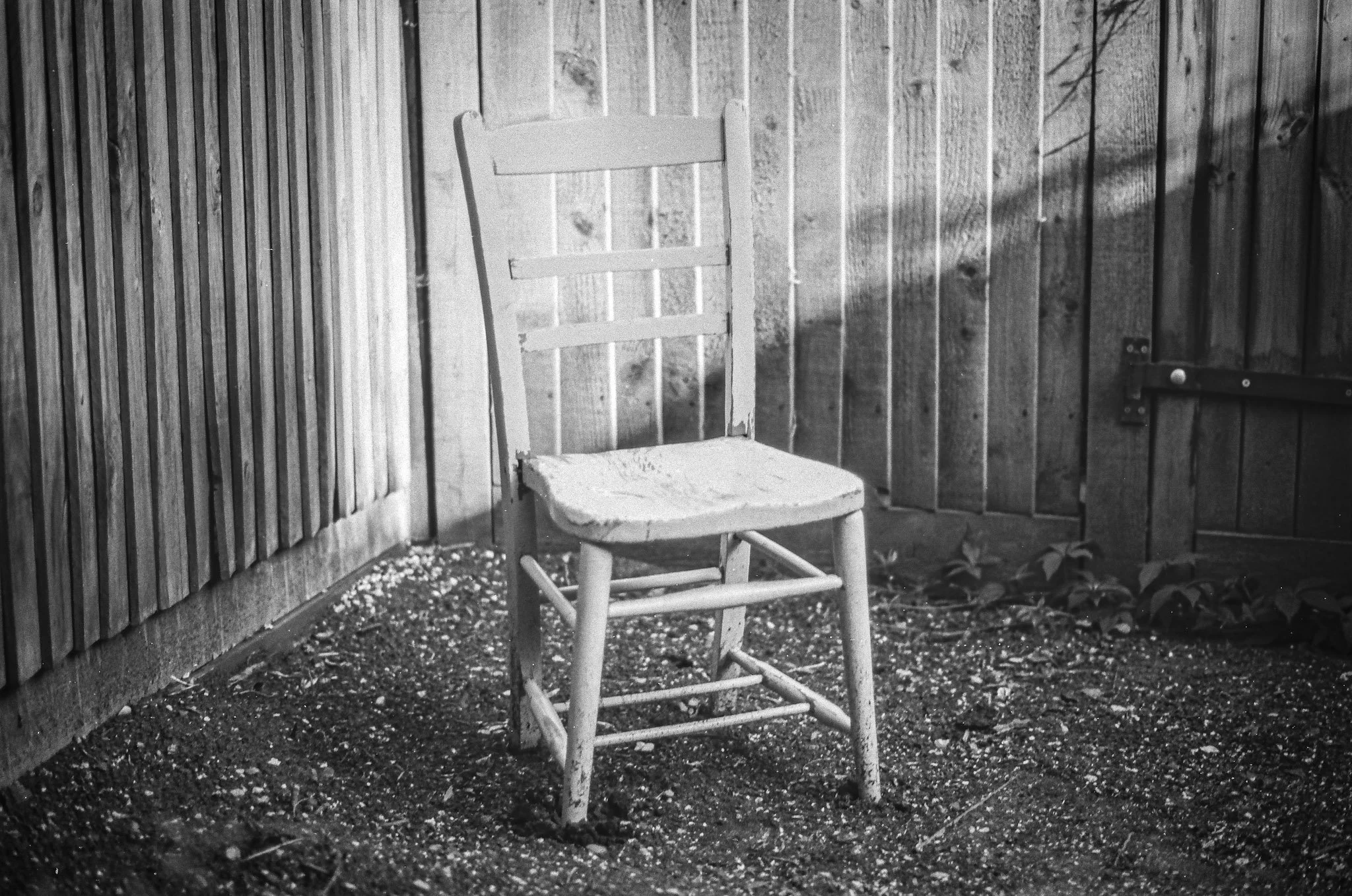
I asked Mike if he'd be one of the subjects for the project, and whether there was something he might want to include, something inherited that carried meaning for him. He has very few of his father's possessions, and this photo strip may be the one thing that does. When he went to fetch it, I wasn't sure what to expect, or whether it would fit the brief I'd set myself. I hadn't seen it before, and my first thought was: if it's very small, how do I shoot it so it doesn't disappear in the wider frame? But when he came back and I looked at it, and at him (he's very tall), the contrast in scale between the small photo and his physical size felt right. I held it for a moment, handed it back, and said it would work. I sometimes look at the obvious and assume it won't. We took a couple of test shots on his stairs that evening, then repeated the shoot a few weeks later, in his garden, in the sun. Mike sat against a brick wall, and I shot as we made small talk about the heat, the gig from a week or two before, Danny, Pat, and other things I don't recall now. We moved to a small wooden chair at the back of the garden. It seemed to be waiting for an occupant, and Mike's scale worked well there too, partly because there were three people in the frame: Mike, his father, and his sister. I hadn't anticipated that, but I saw immediately how it sharpened the sense of loss in this particular relationship.
The earlier test photos, of Mike and the photo strip on his staircase, convinced me the elements worked together as I'd hoped. This time I asked Mike if we could repeat the shoot, but in the back garden, a small urban space he shares with his partner Juliet: a decked area, high boundary fences for privacy, potted plants and small trees giving it a relaxed, sheltered feel. It suited the shoot well as a neutral, available space. Following on from the Gateshead shoot with Joe and Alex, I'd decided that continuing on 120 black and white, using my father's Yashica 124G, alongside digital, would be the right combination. On the day, though, I decided to also shoot 35mm neg, so I brought the Nikon F100 with Tri-X, FortePan 400, and the Lomo Babylon that had been sitting past its expiry date at the back of the fridge. Everything was developed and scanned by Stuck in Film in Croydon, who've done a consistently good job with a growing pile of my negatives. It was hot and sticky. I started with the 120, a roll of FP4, against the brick wall. The depth of field was wide, since the sun gave me no other option and I had no ND filters with me. My first reaction to the expanse of brick wall was that it felt too busy, too distracting. But there are always other ways to look at it, and I've learned my own way of dealing with what feels, at first, like an error: look again, work out what exactly is bothering me, and widen the view. The other shots, the 35mm, the other setups, might counterbalance what I'd read as a mistake.
The shoot ended up spread across two dates, about a week apart, again down to a habit of mine: shooting too close, too soon, chasing detail before I've found the foundational frame. Harry Borden had once told me he preferred my wider group shots from an earlier My Father, My Son session, the ones that gave the subject environmental context. I understood exactly what he meant, and it was obvious I needed that same contextual framing here, to let the story unfold the way I wanted. So I went back later that week and reshot some 120 with a wider frame, against that same busy wall, and it started to feel like a set rather than a single image: the empty chair, Mike against the wall wiping the sweat from his head, the narrow depth of field from the ISO 12 Lomo film on the F100, and the photobooth strip anchoring it all.
This was the shoot that connected with me most personally, because I found my own story inside it too: my father, the camera he passed on to me, and the mixed feelings of inheriting objects and trying to work out what they mean. Mike's story was more complex than mine. His sister was the third point in the triangle, and perhaps she was the punctum that cut deepest, a life and a relationship that was missing, a private loss known only to Mike and his family. I felt trusted, let in on something. Walking home afterwards, I found myself thinking about the weight memories carry, and what they hold for each of us.
I asked Mike for a few words on what this photo, this object, this connection to the past, meant to him. "Photo Booth. Father Roy, clean shaved, suit and tie. Sister Katherine, chocolate mouth. Frozen here, both long gone and time moved on." He also described it simply as "Green lament," a play on his family name. His words came out lyrical, which felt right, given how much of his life has been shaped by listening to and making music.
Max McGonigal © 2026
