Where This Began
When I was nine years old, my father had a conversation with my mother in the living room. It was past bedtime, and I was supposed to be asleep, but that evening felt different. I crept along the corridor in my pyjamas and lay down, resting my chin on the carpet, watching through the slightly open door. My father told my mother he would not be living with us anymore. My mother made a sound I had never heard before. My heart felt like it was burning a hole through the carpet.
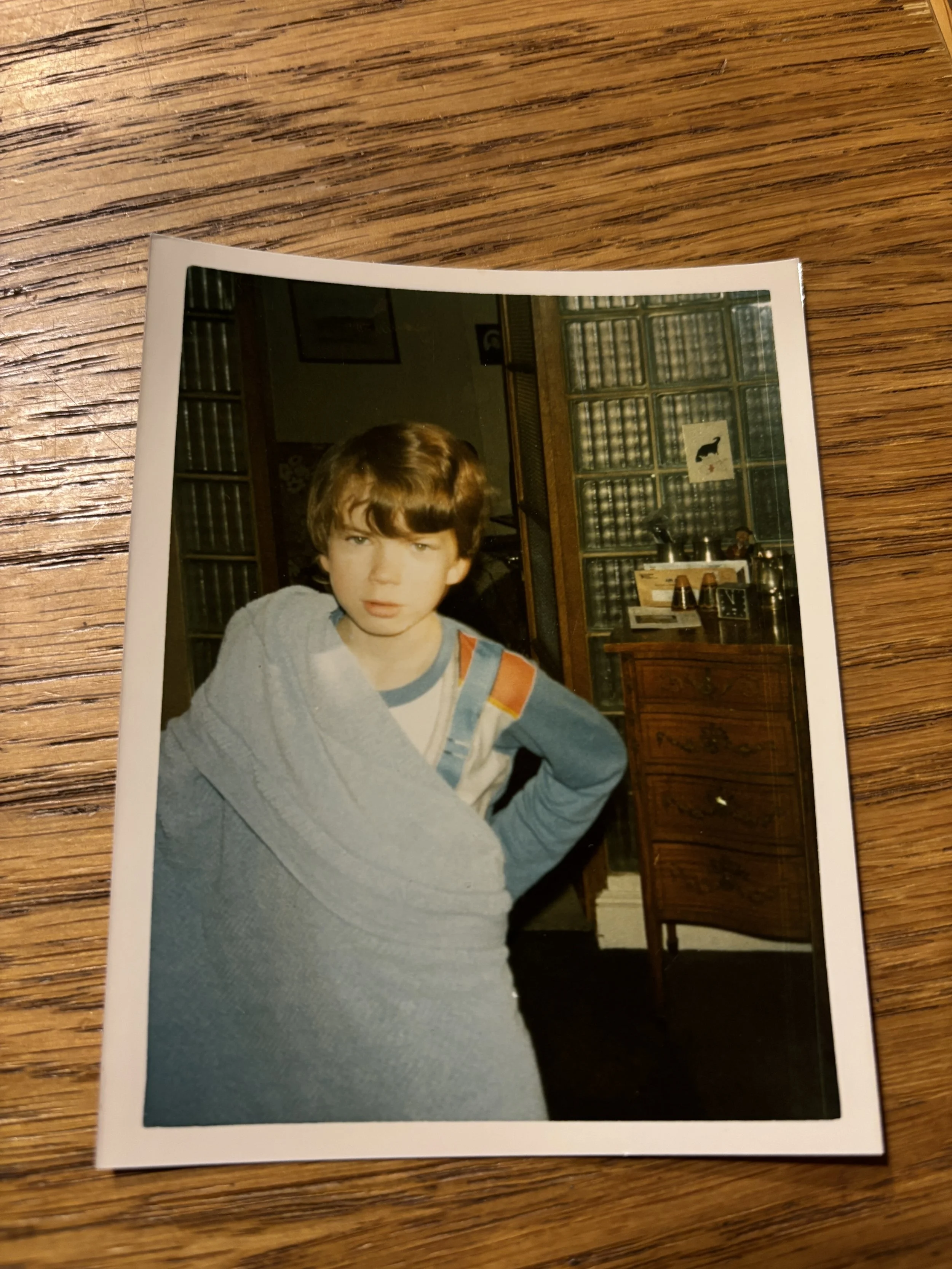
Me, age 9 or 10, around the time my parents split up
Our relationship was shaped by that moment. Afterwards, he became an occasional visitor rather than a constant presence, someone I met in restaurants and hotel bars, our time together bound up with whatever the occasion allowed. Sometimes those meetings were marked with a photograph: me, him, that place, that particular afternoon. I did not understand what I had witnessed on the carpet that night, not then. But I began, slowly, to use photography as a way of trying to make sense of it.
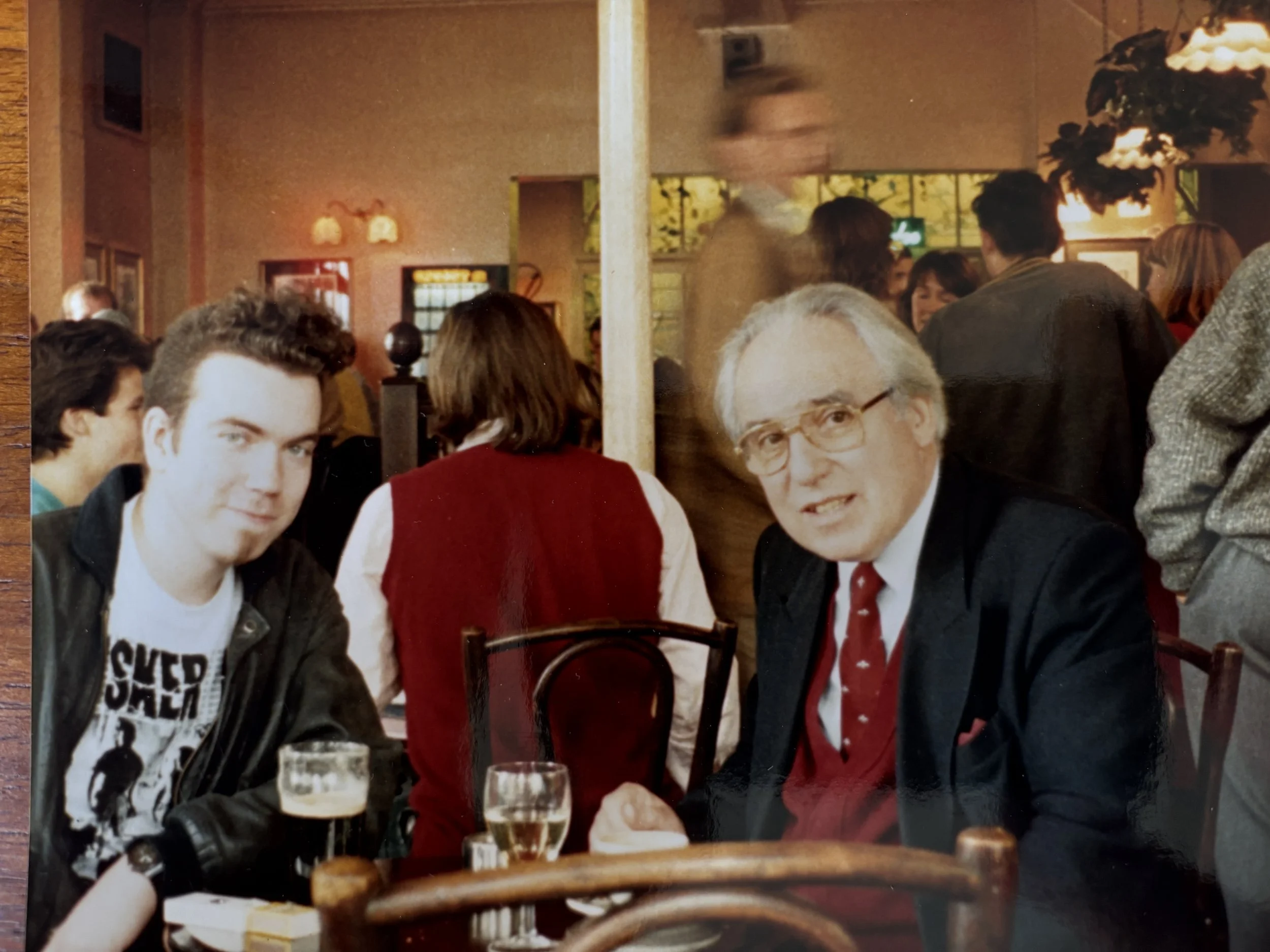
Me and my father, circa 1989
I came to photography the long way round. Years of looking, taking photos, looking at them again, thinking about what they meant to me, before I began to study them seriously. I find myself drawn to questions about what portraits really do, and what they reveal about the people who make them as much as the people they picture.
That question, of what a photograph reveals about the person holding the camera, sits at the centre of my current project, My Father, My Son. It is a long-term study of father-son relationships through portraiture and sequence, part of a tradition of photographers who have turned the camera on their own families. It asks what happens when images accumulate over time: how a single portrait becomes testimony, and how a series becomes something closer to truth. It is, in part, an autobiographical project. Which is to say, it is also about my family, my own father, and the particular silences that pass between men across generations.
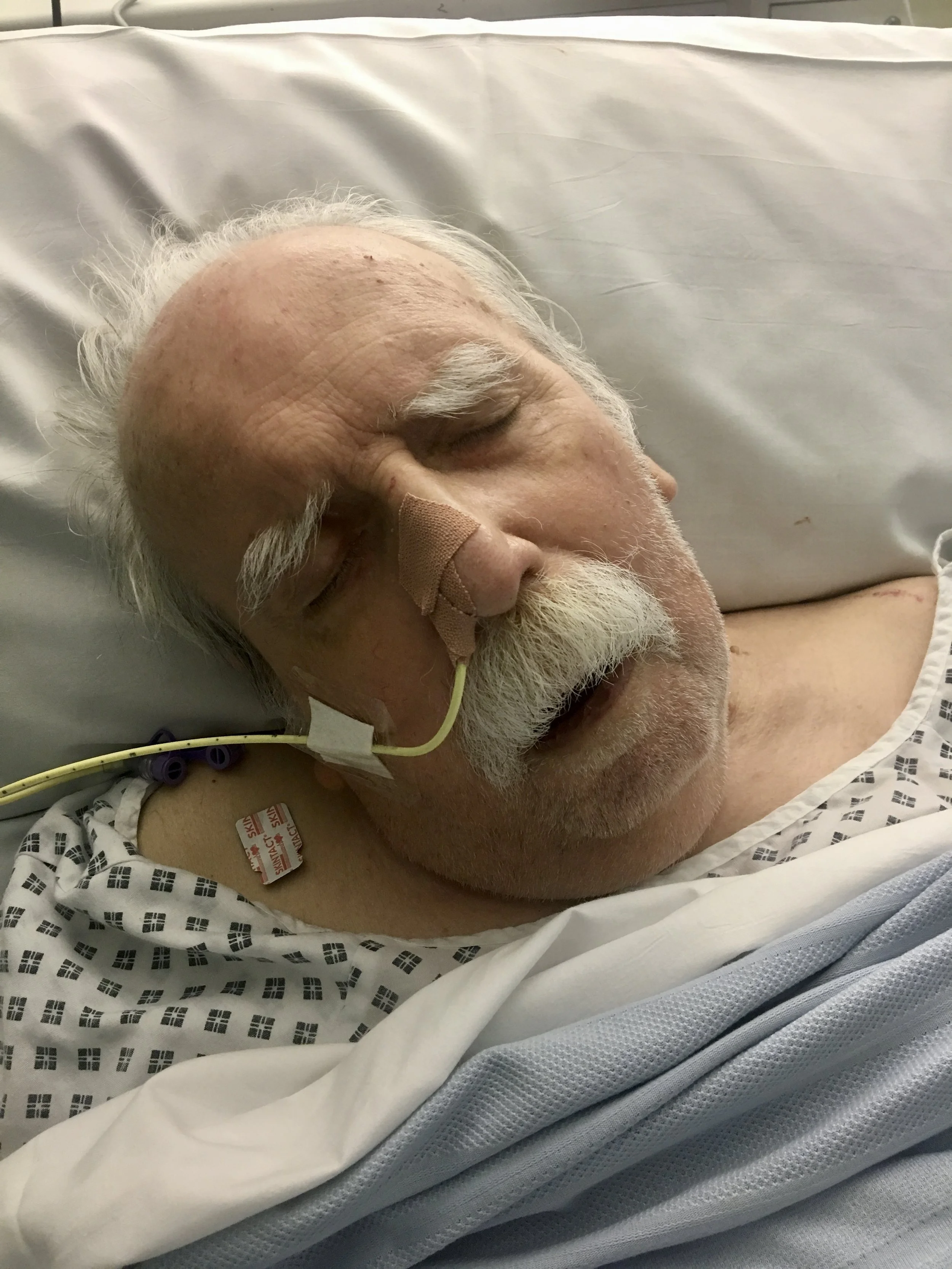
My father, UCH, 2018
Working on this project has taught me something I did not expect when I began. The moment on the carpet taught me that you can witness something completely and still not understand it. Photography, I have come to believe, is not the resolution of that gap, but its honest acknowledgement. Each portrait I make, each testimony a subject offers alongside it, adds to an accumulating record that does not claim to explain a relationship so much as bear witness to it. That, perhaps, is what a series does that a single image cannot: it replaces the false certainty of one photograph with the more truthful condition of an ongoing search.
Max McGonigal © 2026
